Lagrangemulti-physics robot simulator
ROS 2 simulator with switchable multi-physics: robots, drones and cars in a living town with weather, water, traffic and people
What it is
A Gazebo-style simulator where every physical domain is its own switch
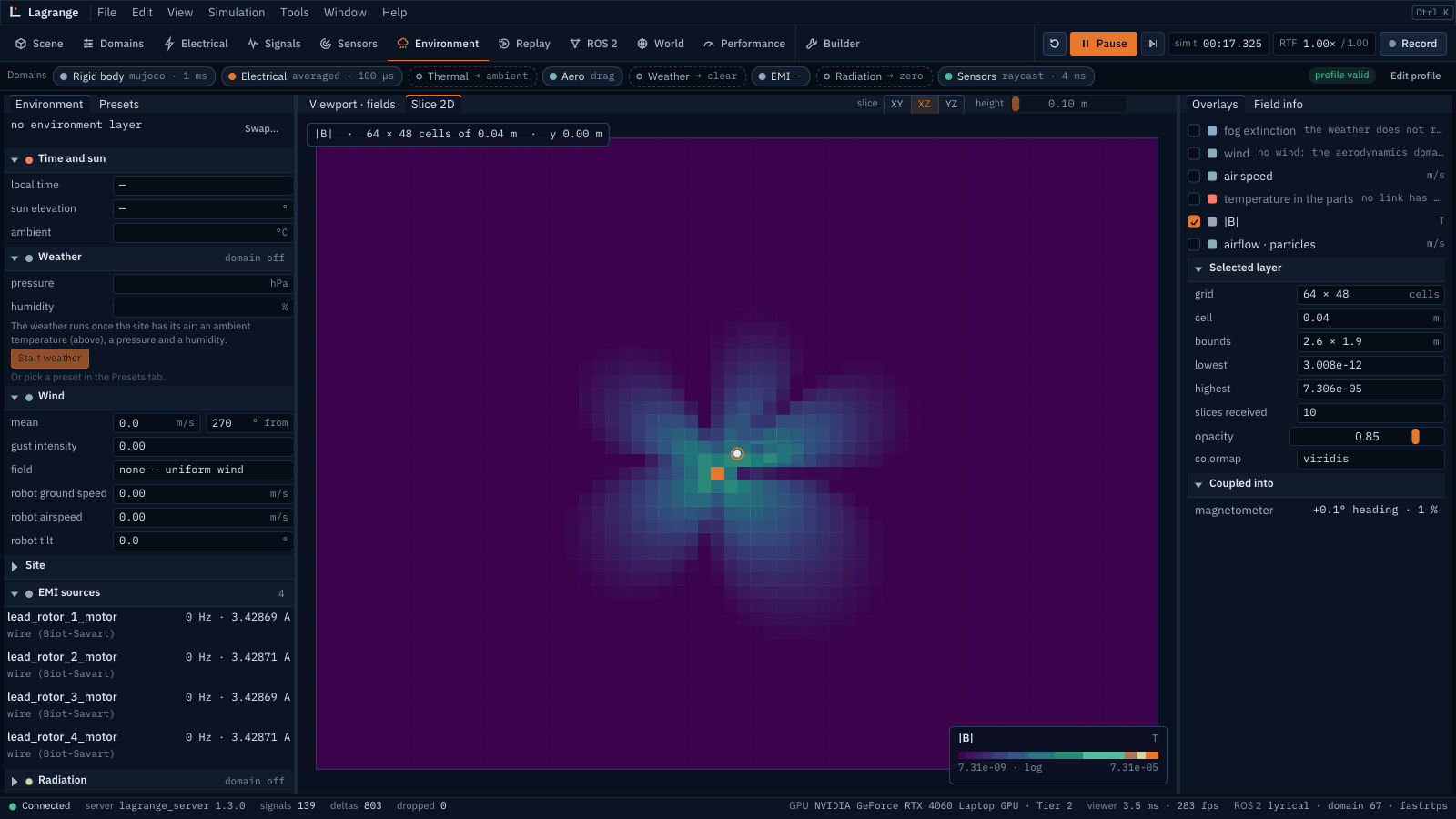
Built for ROS 2 Lyrical on Ubuntu 26.04. Motion, power, heat, air, water, weather, interference and sensors run together on a multirate co-simulation master, and a deterministic CPU mode reproduces every run bit for bit.
Physics you can switch off
Every domain is a module on a unit-checked signal bus. Turn one off and an ideal, constant or replayed substitute takes its place, so a test pays only for the physics it needs.
From a warehouse to a city
Double-precision worlds stream in tiles with a floating origin that follows the robot, built from elevation models, OpenStreetMap and OpenDRIVE roads.
A native GPU viewer
A Vulkan desktop app with Dear ImGui panels: scopes at 10 kHz, the live circuit, fields and sensors, all drawn by the same Slang shaders as the camera sensors.
Physics
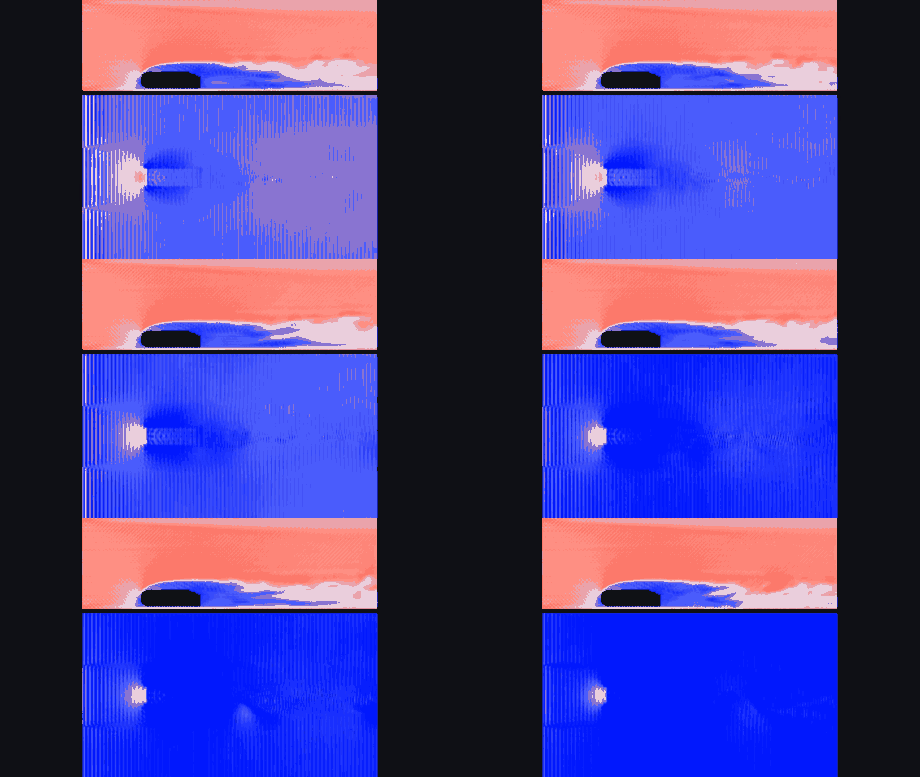
Thirteen domains, one signal bus
Units are checked when the run is wired: a module that writes N·m into an input that wants N stops the start instead of silently converting.

Robot classes
Mobile robots, drones, cars and arms
Import URDF, SDFormat or MJCF as they are; the samples include real models such as Autoware's Lexus RX 450h and Bitcraze's Crazyflie 2.x.
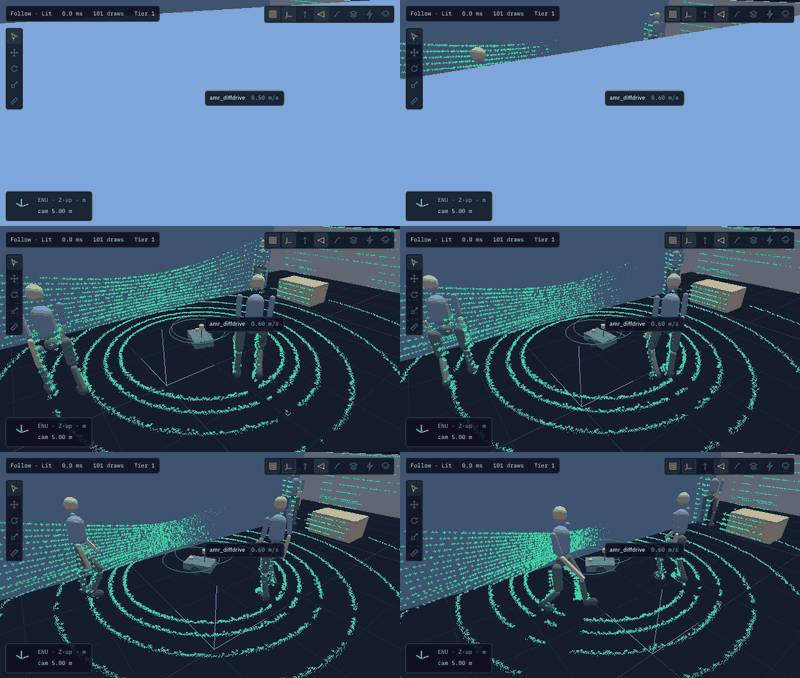
Nav2 and ros2_control, 2D/3D lidar on CPU or GPU, people walking the aisles.
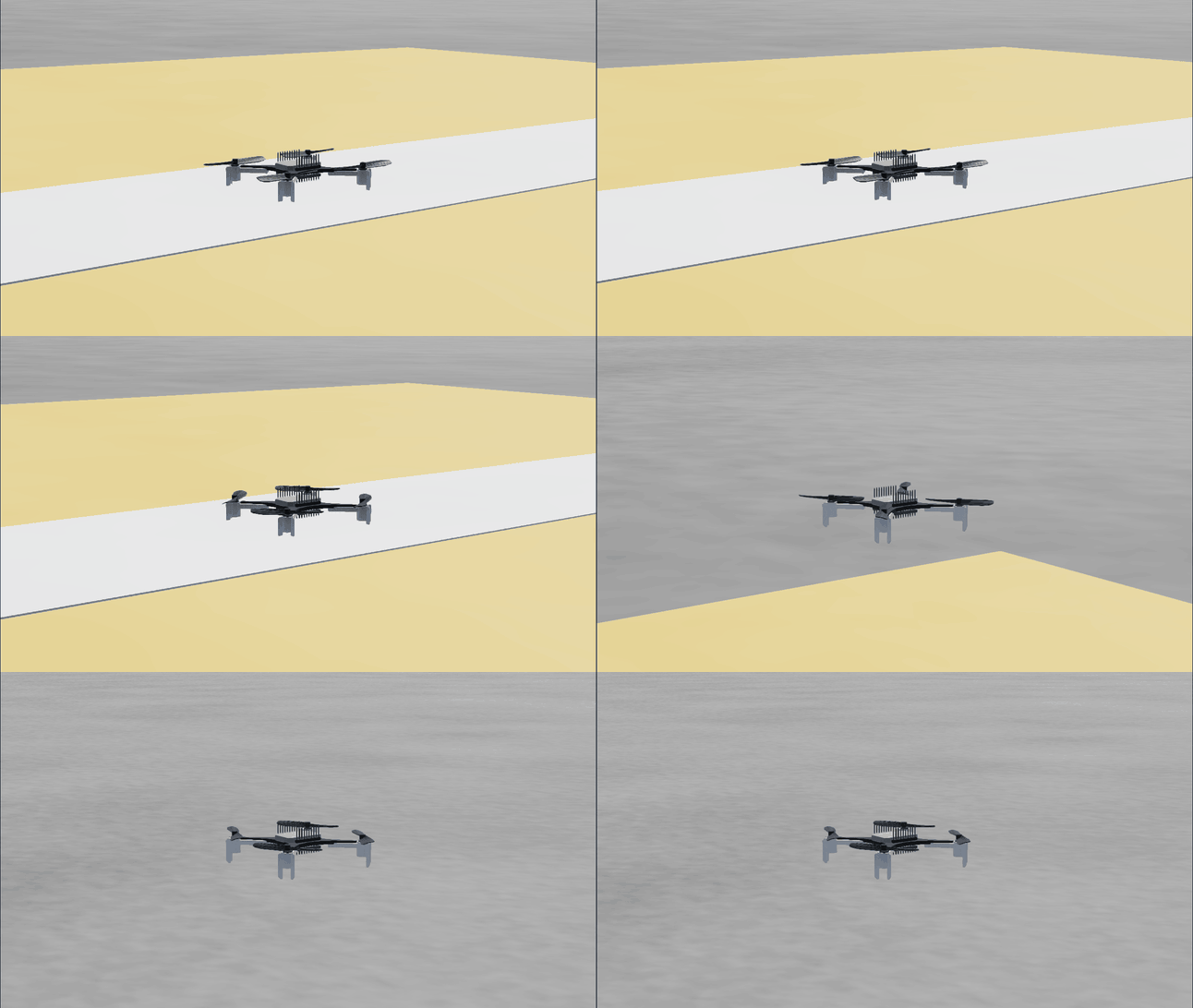
Rotor aerodynamics, PX4 and ArduPilot SITL in lockstep, wind fields.
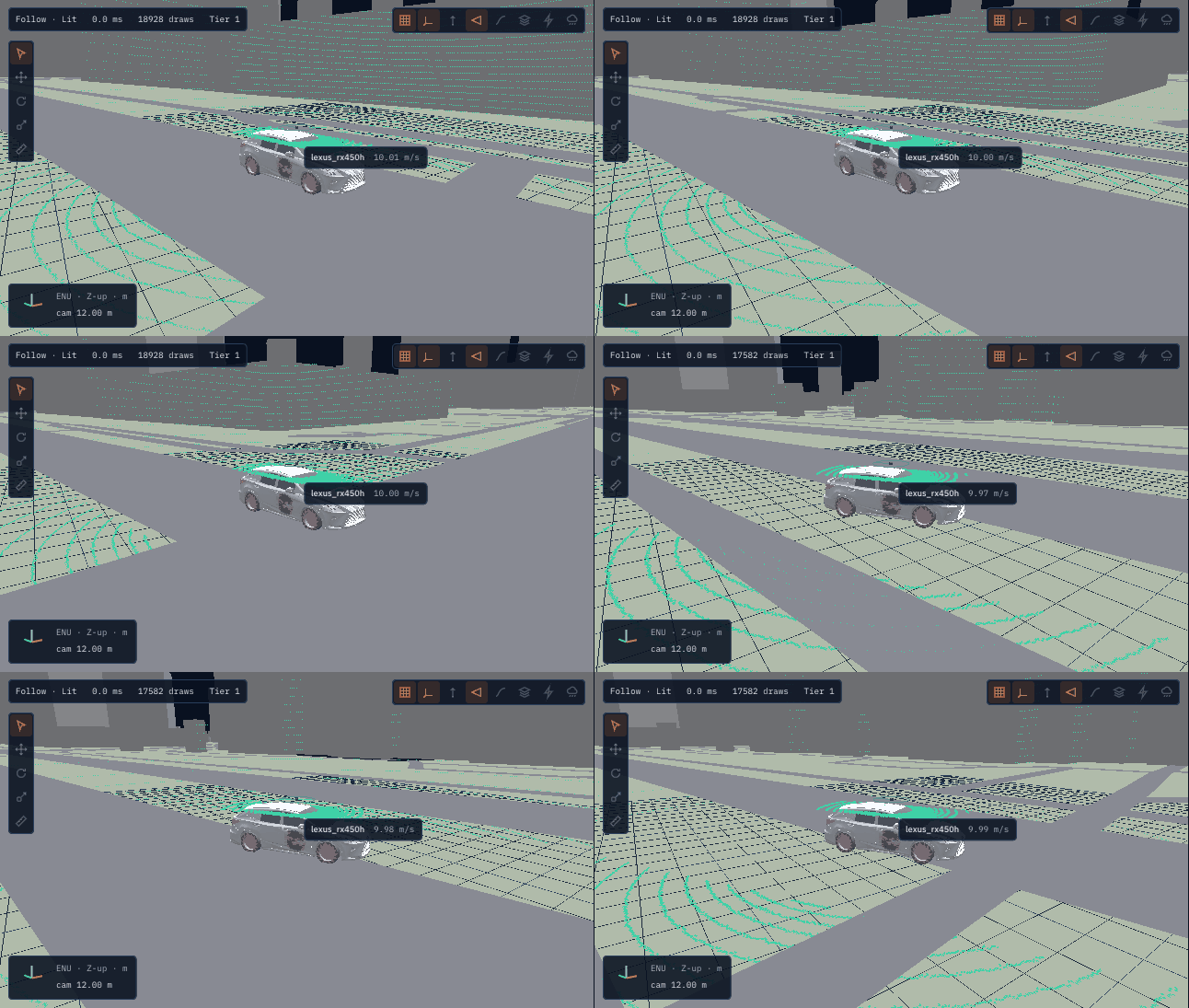
Magic Formula tyres, OpenDRIVE roads, OpenSCENARIO, an Autoware interface.
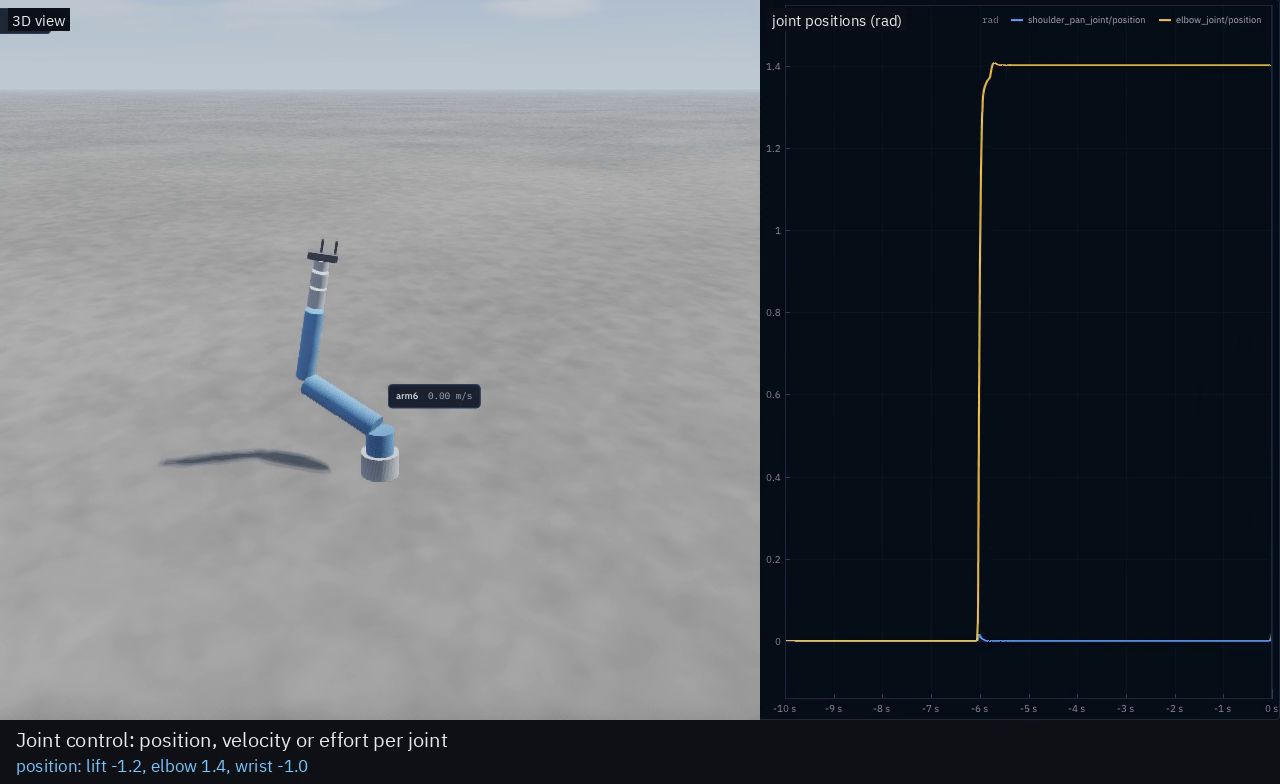
MoveIt 2, motor drives and heating, a battery that sags under load.
New in v1.4
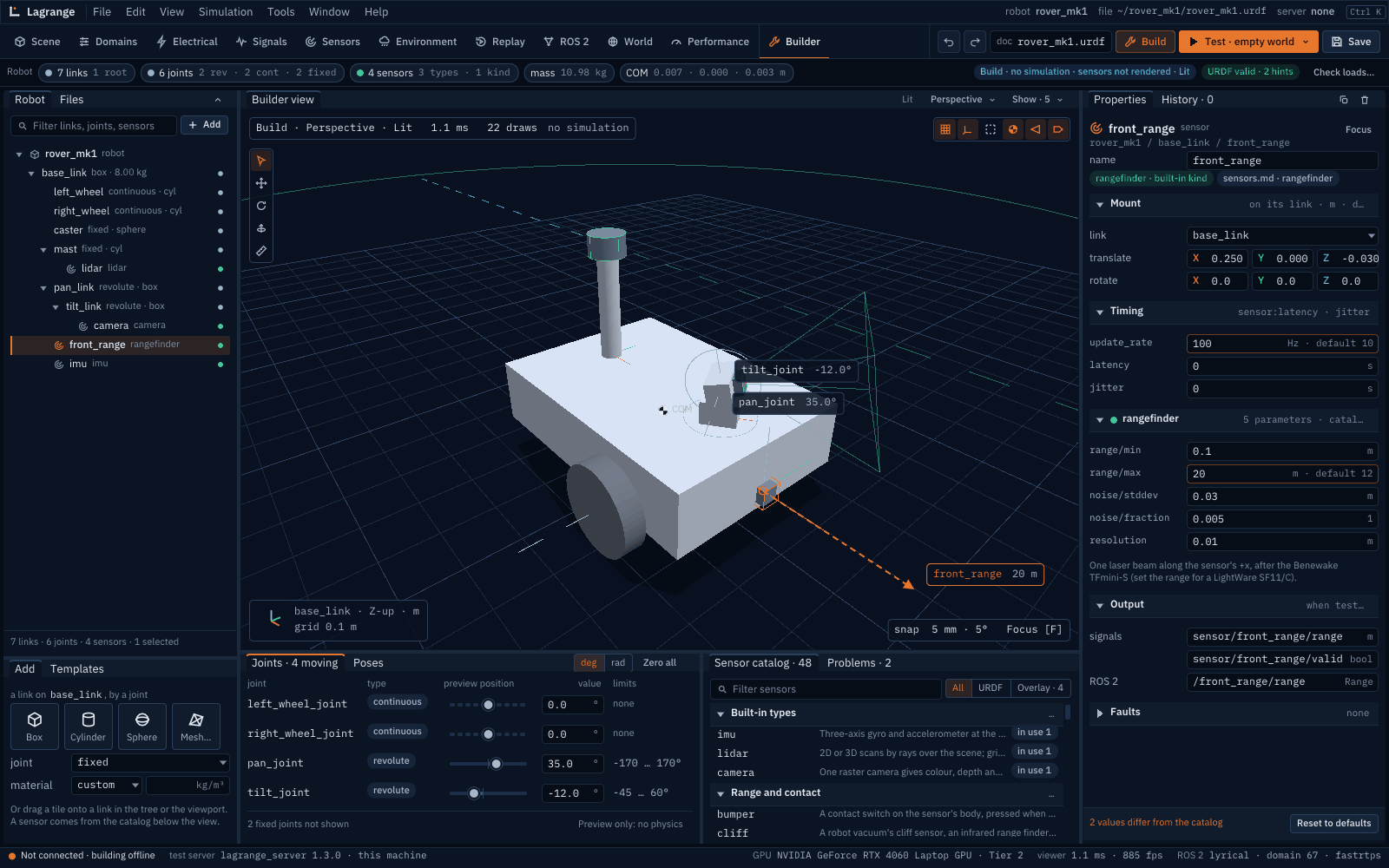
Build a robot in the viewer
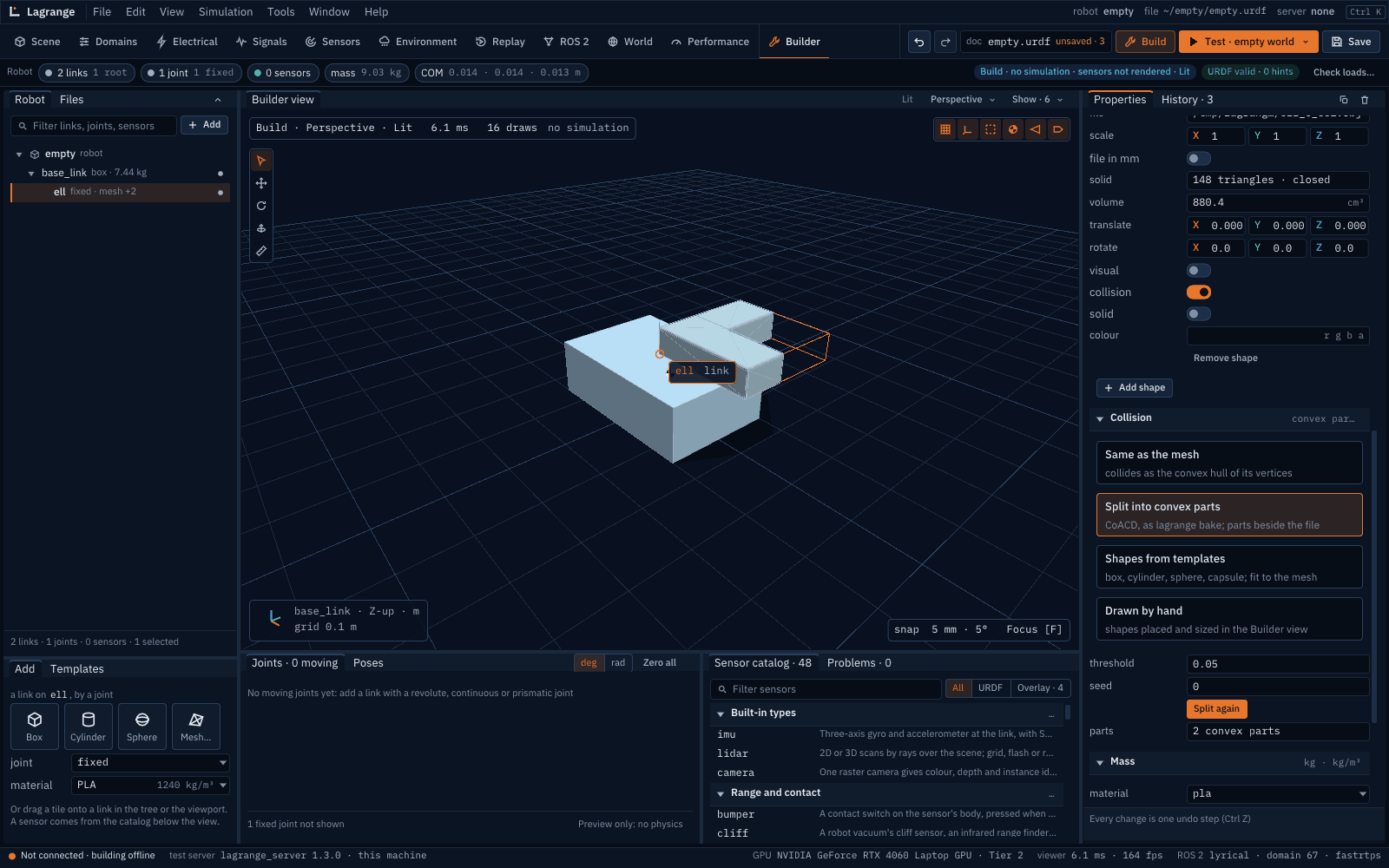
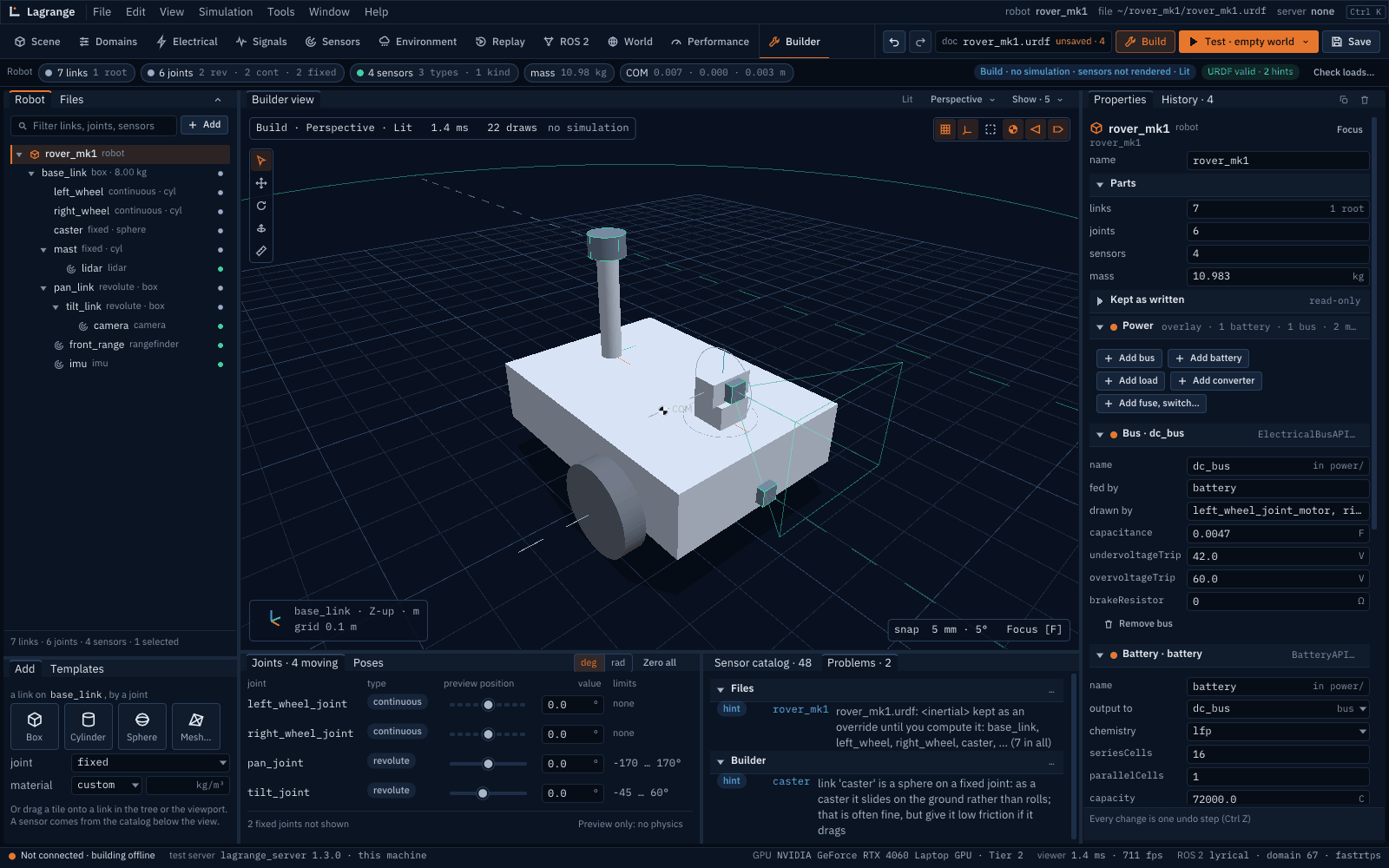
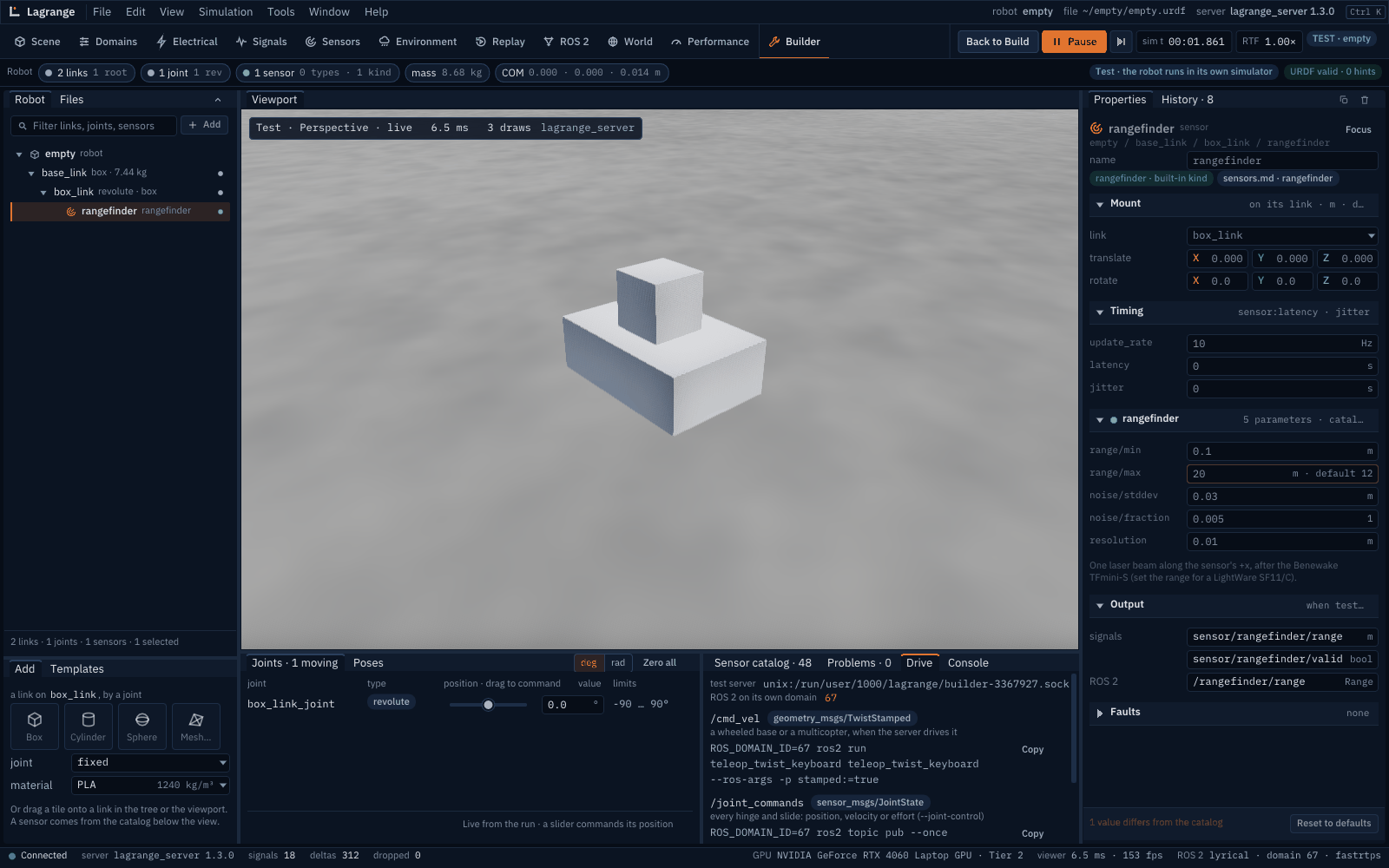
Press Ctrl B: start from a template or a URDF, add parts and meshes, pick how each one collides, mount sensors from a catalog, wire a battery and motors, then press Test to drive it in a world. It saves an ordinary URDF.
See it run
Every clip is a real run
Recorded from the headless viewer. Hover to play, click to watch.
Timeline
From first commit to v1.4 in five weeks
- v0.1Oct 14, 2026
Viewer, protocol, mock server
- v0.2–0.6Oct 25, 2026
Sim core, arms, drones, weather & EMI, cars
- v0.7Oct 29, 2026
Huge worlds
- v1.0Oct 29, 2026
Stable: schemas, plugin ABI, protocol frozen
- v1.1Nov 7, 2026
Plugins, walking people, water, rotor airflow
- v1.2Nov 11, 2026
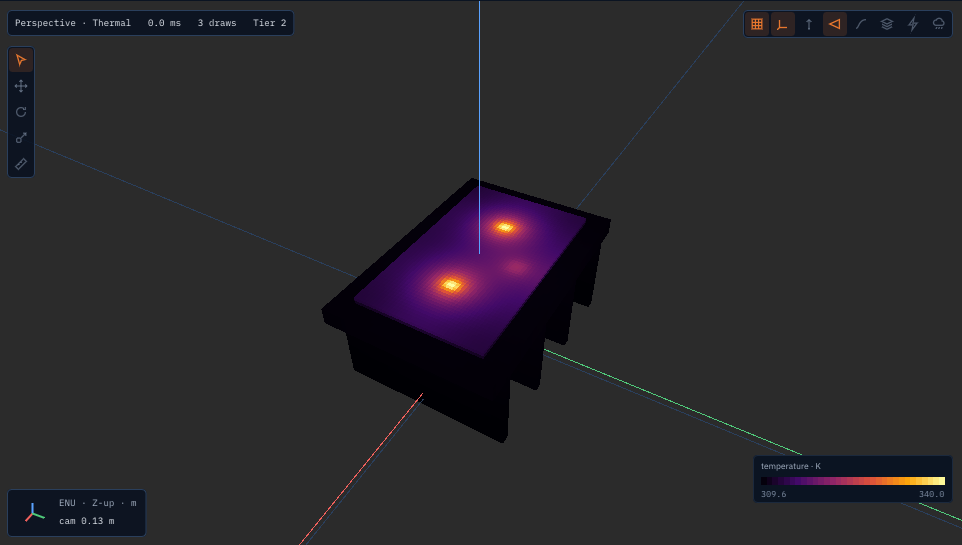
Heat in parts, a robot's own EMI, thermal cameras
- v1.3Nov 14, 2026
37 sensor kinds, 1.3–4.6× faster
- v1.4Nov 15, 2026
Build a robot in the viewer
The hard part
Simulating many physical domains together without forcing every user to pay for all of them, scaling from one warehouse to city-sized worlds without losing float precision, and being honest about accuracy when almost no measured robot data is available yet.
How it is solved
Split each domain into a module on a unit-checked signal bus that can be disabled or replaced by ideal, constant or replayed data, and streamed worlds in tiles with a floating origin that follows the robot. Each model has named tests against closed forms or published references, with a validation report that states what is not met or not yet compared with real robots.
Built with